- Physics Lab Equipment
- Chemistry Lab Equipment
- Biology Lab Equipment
- Anatomical Lab Equipment
- Learning
- Educational Lab Equipment
- Magnets
- Agriculture
- Astronomy
- Earth Science
- Geography Lab Equipment
- Safety Lab Coat
- Laboratory
- Meteorological
- Electricity & Magnetism
- Heat
- School Lab Equipment
- Lab Glassware
- Science Lab Equipment
- Tvet Lab Equipment
- Robotics Kits Supplier and Manufacturer for Schools India
- Math Lab Equipment Manufacturers and Exporters in Ambala
- STEM Kits Manufacturers and Supplier India
- Engineering Lab Equipment
- Hospital Lab Equipment
- Water, Sanitation & Hygiene Supplies
- Cold Chain, Solar & Communication Equipment
- Nutrition
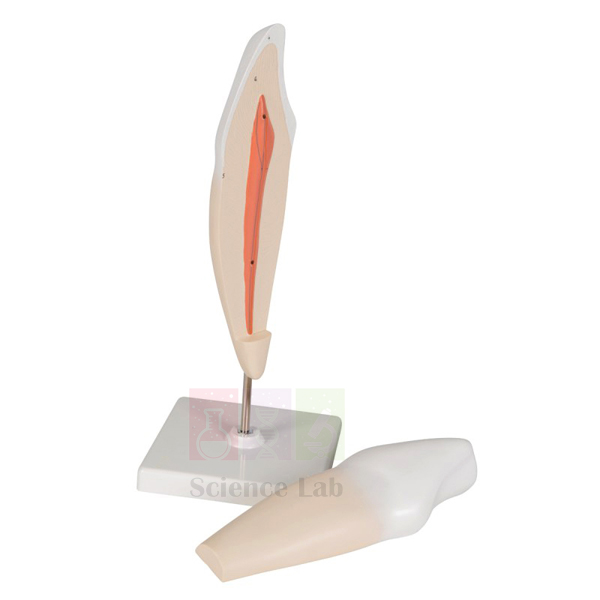
Human Teeth Model, Incisor
Human Teeth Model, Incisor (Product Code: SLE/BL/88) is an enlarged model of a human incisor used to teach the shape and structure of the front cutting teeth in biology, dental and health science classes. The model is divided into two parts, numbered with a key card and mounted on a stand, appropriately coloured and neatly finished. It is made by Jain Scientific Equipments Pvt Ltd (ScienceLab), an OEM among human anatomical models manufacturers in India, at its own factory in Ambala.
Key Details
| Parameter | Detail |
|---|---|
| Tooth represented | Human incisor |
| Scale | Enlarged |
| Parts | Divided into two parts |
| Identification | Numbered, with key card |
| Mounting | On a stand |
| Finish | Appropriately coloured and neatly finished |
| Product code | SLE/BL/88 |
| Manufacturer | Jain Scientific Equipments Pvt Ltd (ScienceLab) — OEM |
| Country of origin | India (made in Ambala, Haryana) |
What Is the Incisor Tooth Model Used For?
Incisors are the chisel-shaped front teeth that bite into and cut food, and an enlarged model makes their form easy for a whole class to see. Teachers use it to explain the crown with its thin cutting edge, the neck and the root, and to introduce the layers of a tooth when discussing how decay progresses from the surface inwards.
Because the model separates into two parts, students can examine each piece and match the numbered features with the key card, which turns a demonstration into a hands-on identification exercise. Placed beside a molar model, it shows clearly how cutting and grinding teeth differ. It is a practical piece of high school biology lab equipment for units on nutrition and the digestive system, where the mouth is the first stage; handle the separated parts over a table so they are not dropped.
OEM Manufacturer
Jain Scientific Equipments Private Limited, trading as ScienceLab, is the OEM of the Human Teeth Model, Incisor and makes it at its own licensed factory at Saha, Ambala, Haryana. Buying from the manufacturer means the model reaches schools, colleges, dealers and importers without a trading intermediary, and quotations, replacement parts or key cards and repeat batches are handled by the same team that makes it; just ask us. Learn more about the company on our profile.
Related Human Models
Teeth models that pair with the incisor when comparing tooth types:
- Human Teeth Model, Lower Molar with One Root — a grinding tooth to contrast with the cutting incisor
- Human Teeth Model, Triple Root Molar — for comparing single and multiple root forms
- Human Teeth Model, Lower Jaw — shows where the incisors sit among the other teeth
- Human Teeth Model, Dentition Development — follows the teeth from birth to adulthood
Explore more anatomy teaching models in the Human Models category.
Frequently Asked Questions
What does the Human Teeth Model, Incisor show?
The Human Teeth Model, Incisor shows an enlarged human incisor, the chisel-shaped front tooth used for cutting food. It is divided into two parts and numbered with a key card so students can identify its features during class study.
How many parts does the incisor model have?
The Human Teeth Model, Incisor is divided into two parts, which students can examine separately and match against the numbered key card. Handling the separated parts over a table helps prevent them being dropped or lost.
Is the Human Teeth Model, Incisor mounted?
Yes, the Human Teeth Model, Incisor is mounted on a stand and is appropriately coloured and neatly finished, so it can stand on a bench, teacher's desk or display shelf between lessons.
What size and material is the incisor model?
The exact enlargement, dimensions and material of the Human Teeth Model, Incisor are not stated in this listing. Contact us and we will confirm them in your quotation so you can plan storage and display space.
Who manufactures the Human Teeth Model, Incisor?
The Human Teeth Model, Incisor is manufactured by Jain Scientific Equipments Pvt Ltd (ScienceLab), the original equipment manufacturer, at its own licensed factory at Saha, Ambala, Haryana, India, and is sold factory-direct to institutions, dealers and importers.
Can the incisor model be ordered with other teeth models?
Yes, the Human Teeth Model, Incisor can be quoted together with the molar, lower jaw and dentition development teeth models, so a school or college can assemble a complete dental teaching set in one order from the manufacturer.
Request a Quote
Request a manufacturer's quotation for the Human Teeth Model, Incisor through our contact page, or add it to the enquiry cart together with other teeth and anatomy models.
Last updated: 24 September 2026