- Physics Lab Equipment
- Chemistry Lab Equipment
- Biology Lab Equipment
- Anatomical Lab Equipment
- Learning
- Educational Lab Equipment
- Magnets
- Agriculture
- Astronomy
- Earth Science
- Geography Lab Equipment
- Safety Lab Coat
- Laboratory
- Meteorological
- Electricity & Magnetism
- Heat
- School Lab Equipment
- Lab Glassware
- Science Lab Equipment
- Tvet Lab Equipment
- Robotics Kits Supplier and Manufacturer for Schools India
- Math Lab Equipment Manufacturers and Exporters in Ambala
- STEM Kits Manufacturers and Supplier India
- Engineering Lab Equipment
- Hospital Lab Equipment
- Water, Sanitation & Hygiene Supplies
- Cold Chain, Solar & Communication Equipment
- Nutrition
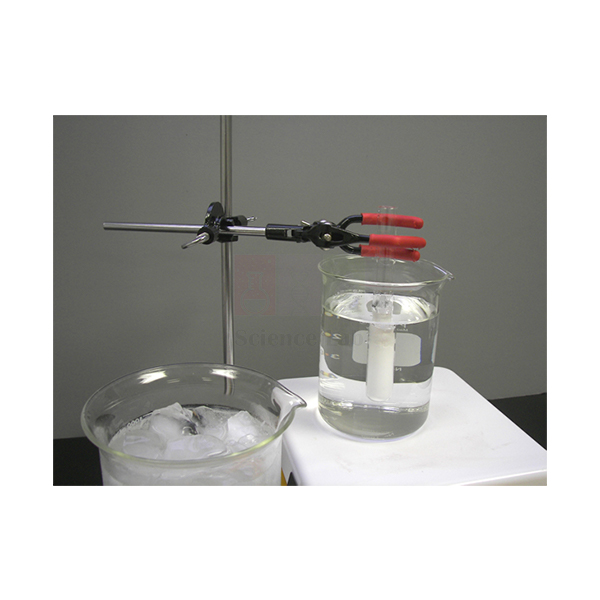
Greener Synthesis Of Acetylsalicylic Acid
Greener Synthesis Of Acetylsalicylic Acid (Product Code: SLE/CH/144) is a multi-step organic chemistry kit that shows how to produce sodium salicylate from a naturally occurring, renewable resource and carry it through to acetylsalicylic acid, the active compound in aspirin. Students convert the sodium salicylate to salicylic acid, check for salicylic acid with a quick confirmatory test, and then use their own prepared salicylic acid for the final synthesis. There are enough materials for 15 groups, plus a teacher’s manual and student copy masters. With its step-by-step structure it works well as a chemistry teaching kit for organic chemistry classes in India and overseas, supplied by Jain Scientific Equipments Pvt Ltd (ScienceLab), Ambala.
Specifications
| Parameter | Detail |
|---|---|
| Groups served | Enough materials for 15 groups |
| Starting point | A naturally occurring, renewable resource |
| Step 1 | Production of sodium salicylate |
| Step 2 | Conversion of sodium salicylate to salicylic acid |
| Check | Quick confirmatory test for the presence of salicylic acid |
| Step 3 | Synthesis of acetylsalicylic acid from the prepared salicylic acid |
| Teaching material | Teacher’s manual and student copy masters |
Typical Use
Because each step produces the starting material for the next, the practical is usually spread over more than one lesson and teaches students something single-step experiments cannot: losses and impurities carry forward, so careful technique early on decides the result at the end. The route also illustrates a core green chemistry idea, using a renewable feedstock, and invites comparison with the way salicylic acid is commonly manufactured from petrochemical sources.
The quick confirmatory test gives groups a checkpoint before they commit their salicylic acid to the final synthesis, which keeps weaker groups from carrying a failed intermediate into the last step. Teachers who want to push further can have students collect the final crystals by suction filtration and compare melting points as a simple purity check. Schools in India looking for a science kit with manual and copy masters ready to photocopy will find the student sheets make marking consistent across groups. Eye protection and supervised handling of reagents are essential throughout, and the product is for laboratory study only.
Supplier
Kits like this one are supplied by ScienceLab, which is how Jain Scientific Equipments Private Limited of Ambala, Haryana, trades. Alongside the apparatus it manufactures, the company supplies chemistry activity kits so that a school or college can place a single order for kits, glassware and heating equipment, with delivery across India and to international markets. Read more on our company profile.
Related Laboratory Equipment
The items below fit the same synthesis workflow, from heating and filtration to checking the product.
- Green Chemistry: Production Of Biodiesel — a companion green chemistry kit for the same unit.
- Water Bath — steady, gentle warming for reaction steps that need heat.
- Filter Pump, Borosilicate Glass — suction for collecting crystals quickly.
- Conical Filter Flask — the receiving flask for suction filtration.
- Apparatus Melting Point — an extension for judging product purity.
Find more practical kits in our Chemistry Lab Equipment category.
Frequently Asked Questions
What natural resource is the starting material?
This page describes it as a naturally occurring, renewable resource; the teacher’s manual gives the details. If you need to know before ordering, for example for a risk assessment, ask through our contact page.
How many groups does the kit cover?
There are enough materials for 15 groups.
May students take the aspirin they make?
No. The acetylsalicylic acid produced is a laboratory product for study only and must never be tasted or swallowed.
How do students know the intermediate step worked?
A quick confirmatory test for salicylic acid is part of the activity, so each group checks its salicylic acid before the final synthesis.
What equipment should the school provide?
That list is not given on this page. We can send it with your quotation, and we can also quote any glassware or heating equipment you are missing.
Can you supply kits for several classes or an export order?
Yes. Quote the product code SLE/CH/144, the number of kits and the delivery address; we supply India and international markets.
Request a Quote
For a price on the Greener Synthesis Of Acetylsalicylic Acid kit, contact us via the contact page or add it to the enquiry cart with any filtration or heating apparatus you need.
Last updated: 24 September 2026