- Physics Lab Equipment
- Chemistry Lab Equipment
- Biology Lab Equipment
- Anatomical Lab Equipment
- Learning
- Educational Lab Equipment
- Magnets
- Agriculture
- Astronomy
- Earth Science
- Geography Lab Equipment
- Safety Lab Coat
- Laboratory
- Meteorological
- Electricity & Magnetism
- Heat
- School Lab Equipment
- Lab Glassware
- Science Lab Equipment
- Tvet Lab Equipment
- Robotics Kits Supplier and Manufacturer for Schools India
- Math Lab Equipment Manufacturers and Exporters in Ambala
- STEM Kits Manufacturers and Supplier India
- Engineering Lab Equipment
- Hospital Lab Equipment
- Water, Sanitation & Hygiene Supplies
- Cold Chain, Solar & Communication Equipment
- Nutrition
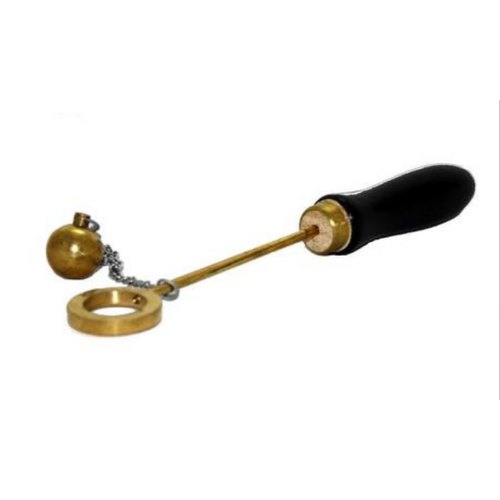
Gravesand Ring-Device to Demonstrate Thermal Expansion
Gravesand Ring-Device to Demonstrate Thermal Expansion (Product Code: SCL1255/020) is the traditional ’s Gravesande ring-and-ball apparatus: a ball and a ring matched so closely that the ball slips through the ring at room temperature but sticks once the ball has been heated. It gives students an instant, visible proof that solids expand when heated, and is used in middle- and secondary-school heat lessons as a simple demonstration model for the physics lab. This ring device is made by Jain Scientific Equipments Pvt Ltd (ScienceLab) at Ambala, Haryana.
Specifications
| Parameter | Detail |
|---|---|
| Type | Gravesande ring (ring-and-ball thermal expansion device) |
| Ball diameter | 15 mm |
| Fit | Ball passes through the ring at room temperature; does not pass when the ball is heated |
| Handles | Both the ball and the ring have handles |
Typical Use
Start by passing the cold ball through the ring to show the class that it fits. Then hold the ball by its handle in the flame of a spirit lamp or Bunsen burner for a short while and try again: the ball now rests on top of the ring instead of dropping through. Leave it there and, as it cools, it eventually falls through — a second observation that shows contraction on cooling. Heating the ring as well opens its hole a little, which makes a good discussion question on whether the hole in a heated plate grows or shrinks.
The demonstration links naturally to everyday examples such as gaps in railway lines, loosening a tight jar lid under hot water and the sag of power lines in summer. Always hold both parts by their handles, rest the hot ball on a heat-resistant mat, and let it cool in air before storage. As a small, reusable piece of heat apparatus it complements a heat energy science kit in the school lab.
Manufacturer
ScienceLab apparatus such as this ring device comes from Jain Scientific Equipments Private Limited in Ambala, Haryana, a company that produces demonstration and practical equipment for physics, chemistry and biology teaching. Visit the about-the-company page for details of who we are.
Related Lab Equipment
To run and extend a thermal-expansion lesson, teachers often order these alongside the ring device:
- Glass Spirit Lamp — a simple heat source for classrooms without a gas supply.
- Bunsen Burner — heats the ball faster in labs fitted with gas.
- Ball & Ring Apparatus — an alternative ring-and-ball design for additional student groups.
- Bar Compound Copper & Iron — shows that different metals expand by different amounts.
- Expansion Apparatus — moves the topic on to measuring linear expansion.
Other heat and mechanics items are grouped in the Lab Equipment category.
Frequently Asked Questions
How does the ring device show thermal expansion?
The 15 mm ball passes through the ring when both are at room temperature; after the ball is heated it expands and no longer passes, which students can see immediately.
Is a heat source included?
No burner or lamp is listed with the device. A spirit lamp or a Bunsen burner is suitable, and both are available from our catalogue.
Can students handle it safely?
Both the ball and the ring have handles so the metal parts need not be touched, but the ball stays hot for some time after heating. Under teacher supervision, set it down on a heat-resistant surface and allow it to cool naturally.
What metal are the ball and ring made of?
The product listing does not specify the material. If your syllabus or tender needs it stated, please ask us through the contact page.
Why is the name spelled “Gravesand”?
It refers to the Gravesande ring, named after the Dutch scientist Willem ’s Gravesande, who used this ring-and-ball arrangement to demonstrate expansion; the listing uses a shortened spelling.
What should I include when requesting a quotation?
Give the product code SCL1255/020, the number of units, your institution’s name and the delivery location. We quote for schools across India and for buyers in international markets.
Request a Quote
Ready to order the ring device? Contact ScienceLab for a quotation, or add it to the enquiry cart with the heat source and other apparatus you need.
Last updated: 24 September 2026