- Physics Lab Equipment
- Chemistry Lab Equipment
- Biology Lab Equipment
- Anatomical Lab Equipment
- Learning
- Educational Lab Equipment
- Magnets
- Agriculture
- Astronomy
- Earth Science
- Geography Lab Equipment
- Safety Lab Coat
- Laboratory
- Meteorological
- Electricity & Magnetism
- Heat
- School Lab Equipment
- Lab Glassware
- Science Lab Equipment
- Tvet Lab Equipment
- Robotics Kits Supplier and Manufacturer for Schools India
- Math Lab Equipment Manufacturers and Exporters in Ambala
- STEM Kits Manufacturers and Supplier India
- Engineering Lab Equipment
- Hospital Lab Equipment
- Water, Sanitation & Hygiene Supplies
- Cold Chain, Solar & Communication Equipment
- Nutrition
Science Material is a set of 10 simple, child-friendly tools for exploring magnetism, light, magnification and the sun in an ordinary classroom, suited to primary and early middle-school teachers, science clubs and activity centres. Jain Scientific Equipments Pvt Ltd (ScienceLab), Ambala supplies these items to teachers who want a hands-on science kit for primary school lessons without setting up a full laboratory.
What Does the Science Material Range Include?
| Topic | What it covers | Example products |
|---|---|---|
| Magnetism | Attraction and repulsion, poles and field patterns with iron filings | Magnets Activity Set, Bar Magnet (Plastic) |
| Light and reflection | Mirrors, reflection and symmetrical patterns | Periscope, Kaleidoscope |
| Magnification and observation | Close-up study of insects, leaves, fabric, paper and skin | Bug Box, Lens Big, Linen Tester |
| Sun and sky | Teacher-supervised viewing of the sun | Solar Filter |
| Balance and equality | Balancing quantities and numbers | Number Balance |
| Guided investigations | Activity-card experiments with simple lab items | Primary Science Deluxe Lab Set |
Featured Science Material
| Product | Product Code | Typical Use |
|---|---|---|
| Magnets Activity Set | SLE/SM/01 | Polarity, attraction and repulsion using bar, ring and horseshoe magnets, a maze tray and activity cards |
| Primary Science Deluxe Lab Set | SLE/SM/02 | Step-by-step experiments with flasks, funnels, test tubes and a stand, recorded in a write-and-wipe journal |
| Bar Magnet (Plastic) | SLE/LSM/01 | Showing magnetic field patterns with the iron filings in the plastic box |
| Bug Box | SLE/LSM/02 | Keeping a small insect in a magnifying pot for close viewing |
| Linen Tester | SLE/LSM/05 | Fold-up magnifier for examining the texture of cloth, paper and skin |
| Periscope | SLE/LSM/07 | Explaining reflection with two parallel mirrors set at 45° |
| Kaleidoscope | SLE/LSM/03 | Exploring multiple reflections and symmetry |
| Solar Filter | SLE/LSM/08 | Supervised sun-viewing activities with a double-sheet aluminium polymer film |
Supply & Company Details
Science Material is supplied by Jain Scientific Equipments Private Limited, the company behind the ScienceLab name in Ambala, Haryana. Institutional buyers registering a new vendor can record its GSTIN 06AAECJ8618A1ZT and its Legal Entity Identifier, LEI 3358004HRD1JIVXKYX49. Items can be ordered singly for a science corner or in class quantities for schools, tenders and export orders.
Related Ranges
- Learning — the parent hub of classroom learning aids.
- Magnets — the dedicated magnet range with more shapes and demonstrators, such as the Early Magnetism Kit.
- Microscope — the next step when hand lenses and bug boxes are no longer enough.
- Educational Kits — includes the Science Teaching Kit for teacher demonstrations.
- Physics Lab Equipment — lenses, mirrors and optics apparatus for secondary labs.
- Stem Science kits — project-style STEM science kits rather than single classroom items.
Frequently Asked Questions
What does Science Material include?
Science Material includes 10 items covering magnetism, light and reflection, magnification, supervised sun viewing and balancing, plus a guided lab set with activity cards, all suited to primary and early middle-school classrooms rather than a full laboratory.
Do the Science Material items come with activity ideas?
Two Science Material items do, according to their product pages: the Magnets Activity Set includes 10 double-sided activity cards and an activity guide, and the Primary Science Deluxe Lab Set includes 20 double-sided activity cards and a write-and-wipe journal.
How is Science Material different from the Magnets range?
Science Material is a mixed starter selection across several classroom science topics. Magnets is a dedicated range, so choose it when you need more magnet types, demonstrators or larger class quantities of magnets.
Who supplies the Science Material range?
The Science Material range is supplied by Jain Scientific Equipments Pvt Ltd (ScienceLab), Ambala, which quotes single items for a science corner, class sets for several schools, and tender or export quantities.
What should a Science Material quotation request include?
A Science Material quotation request should give product codes (for example SLE/SM/01 or SLE/LSM/07), quantities per class, the number of schools, the class level and the delivery location.
Request a Quote or Catalogue
Get a Science Material quotation or catalogue through the contact page, or add items to the shopping cart for your science corner.
Last updated: 24 September 2026
Magnets Activity Set
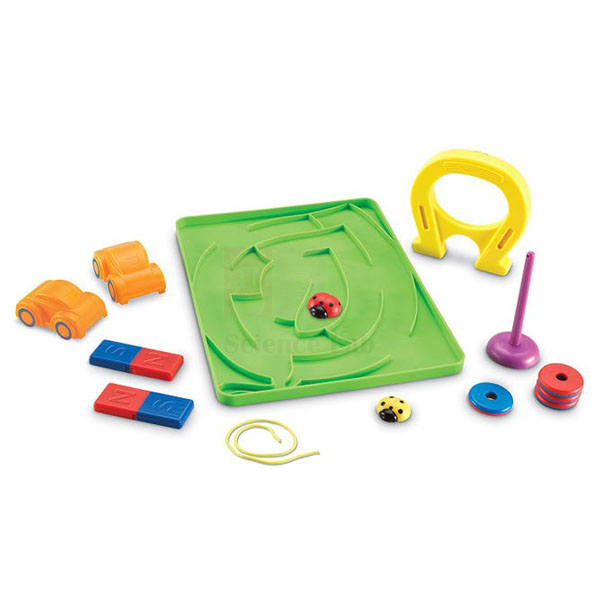
Magnets Activity Set (Product Code: SLE/SM/01) is a hands-on magnetism experiment kit used to teach early learners about polarity and magnetic attraction and repulsion in pre-primary and primary classrooms. It combines durable magnets in several shapes — bar, ring and horseshoe magnets, magnetic bugs and snap-on cars — with a maze tray, 10 double-sided activity cards and an activity guide with reproducible materials. It is supplied by Jain Scientific Equipments Pvt Ltd (ScienceLab), Ambala, India.
Key Details
| Parameter | Detail |
|---|---|
| Topics covered | Magnetism, polarity, magnetic attraction and repulsion |
| Intended users | Early learners |
| Magnet shapes | Bar, ring and horseshoe magnets, magnetic bugs, magnetic post |
| Activity cards | 10, double-sided |
| Teacher support | Comprehensive activity guide with reproducible materials |
| Product code | SLE/SM/01 |
| Supplied by | Jain Scientific Equipments Pvt Ltd (ScienceLab), Ambala, India |
Contents of the set:
- 2 magnetic bugs
- 2 bar magnets
- 4 ring magnets
- Horseshoe magnet
- Magnetic post
- 2 snap-on cars
- Tray with maze
- String
- 10 double-sided activity cards
- Comprehensive activity guide with reproducible materials
What Is the Magnets Activity Set Used For?
Young children use the set to discover what magnets do by playing with them: stacking the ring magnets on the magnetic post to see like poles push apart, pulling the snap-on cars along with a bar magnet without touching them, and steering pieces through the maze tray. The activity cards turn each discovery into a short, guided task.
Work in small groups so every child handles the magnets, and let pupils predict what will happen before each test. As a hands-on science kit for primary school classes, it pairs well with a simple “sticks or does not stick” sorting activity using classroom objects. Keep magnets away from phones and computers, and supervise young children because the set contains small pieces.
Supplier
ScienceLab, the trading name of Jain Scientific Equipments Private Limited in Ambala, Haryana, supplies the Magnets Activity Set to pre-schools, primary schools, activity centres and dealers across India and international markets. The set is a sourced item in our Science Material range. Company details are on the ScienceLab profile page.
Related Science Material
Extend magnet lessons with these items:
- Bar Magnet (Plastic) — plastic-cased bar magnets with iron filings for field-pattern follow-up work
- Primary Science Deluxe Lab Set — broader early-science kit with activity cards
- Steel Horseshoe Magnet — a larger single magnet for class demonstrations
- Compass Plotting (Clear) — shows the direction of a magnet’s field for older pupils
See more in the Science Material category and the Magnets category.
Frequently Asked Questions
What is included in the Magnets Activity Set?
The Magnets Activity Set (SLE/SM/01) includes 2 magnetic bugs, 2 bar magnets, 4 ring magnets, a horseshoe magnet, a magnetic post, 2 snap-on cars, a tray with maze, string, 10 double-sided activity cards and a comprehensive activity guide with reproducible materials.
What age group is the Magnets Activity Set for?
The Magnets Activity Set is designed for early learners, so it suits pre-primary and early primary classes. No exact age range is stated in our listing; teachers should supervise use because the set contains small magnets and parts.
Which concepts does the Magnets Activity Set teach?
The Magnets Activity Set introduces magnetism, polarity, and magnetic attraction and repulsion. Children see like poles push apart and unlike poles pull together, test which objects a magnet picks up, and follow the activity cards to talk about what they observe.
Does the Magnets Activity Set include teacher material?
Yes. The Magnets Activity Set comes with a comprehensive activity guide containing reproducible materials, plus 10 double-sided activity cards. Teachers can copy the reproducible sheets for each group, which makes the set practical for whole-class lessons.
Who supplies the Magnets Activity Set?
The Magnets Activity Set is supplied by Jain Scientific Equipments Pvt Ltd (ScienceLab), Ambala, Haryana, India, to schools, pre-schools, activity centres and dealers across India and international markets. It is a sourced item within the company’s Science Material range.
How should the Magnets Activity Set be stored?
Store the Magnets Activity Set in a closed box away from computers, phones and cards with magnetic strips. Keep the bar magnets in pairs with opposite poles together, and count the small pieces after each lesson so none go missing.
Request a Quote
To order the Magnets Activity Set for one class or several schools, send the number of sets and your delivery location through the contact page, or add it to the enquiry cart with other science material.
Last updated: 24 September 2026
Primary Science Deluxe Lab Set
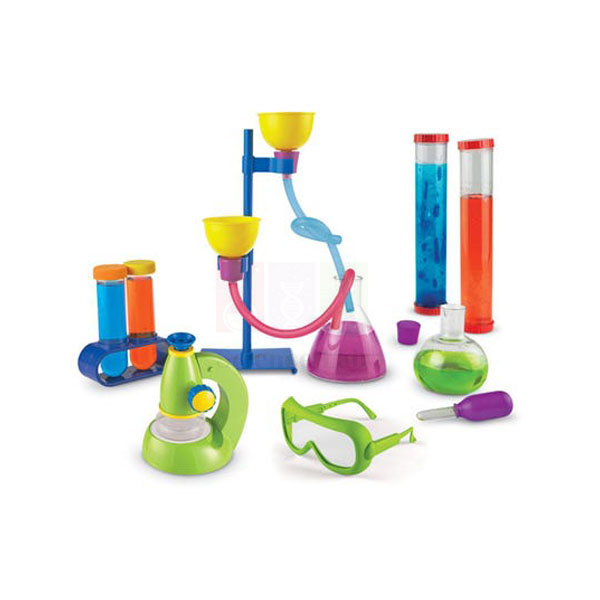
Primary Science Deluxe Lab Set (Product Code: SLE/SM/02) is a junior lab kit for primary school children, used to let young learners carry out their own simple experiments in classrooms and science corners. It pairs flasks, funnels, test tubes, safety glasses, a ViewScope and a 13 1/4 inch stand with adjustable clips with 20 double-sided activity cards and a write & wipe journal, building observation, prediction and fine motor skills. It is supplied by Jain Scientific Equipments Pvt Ltd (ScienceLab), Ambala, India.
Specifications
| Parameter | Detail |
|---|---|
| Stand | Tall stand with adjustable holder clips, 13 1/4 inches high |
| Activity cards | 20, double-sided, with step-by-step instructions |
| Recording | Write & wipe journal |
| Skills developed | Problem solving, fine motor skills, following multi-step directions, sequential thought, math concepts, making predictions, observation |
| Learning style | Visual, tactile |
| Product code | SLE/SM/02 |
| Supplied by | Jain Scientific Equipments Pvt Ltd (ScienceLab), Ambala, India |
The set includes:
- 2 flasks (round-bottomed and flat-bottomed)
- 2 funnels
- Safety glasses
- Tall stand with adjustable holder clips
- 2 large test tubes with stand
- Eyedropper
- 2 twisty connector tubes
- 3 stoppers
- Sensory tube with solid and vented lids
- Primary Science ViewScope with viewing case
- 20 double-sided activity cards
- Write & wipe journal
What Is the Primary Science Lab Set Used For?
Children follow the step-by-step activity cards to pour and measure liquids with the funnels and eyedropper, link the flasks and test tubes with the twisty connector tubes, and look closely at small objects in the ViewScope and sensory tube. The stand holds glassware-style pieces at a steady height so small hands can work safely.
Before each activity, pupils write a prediction in the write & wipe journal, then record what actually happened — an early version of the observe, predict and record cycle used in later science. It also works as a science activity kit for kindergarten groups when an adult leads each step. Put the safety glasses on at the start of every session.
Supplier
Jain Scientific Equipments Private Limited trades as ScienceLab and supplies the Primary Science Deluxe Lab Set from Ambala, Haryana, to primary schools, pre-schools, activity centres and dealers in India and international markets. It is a sourced kit in our Science Material range. Learn about the company on our profile page.
Related Science Material
These items extend the experiments young scientists can do with the set:
- Magnets Activity Set — magnet shapes, cars and a maze tray for magnetism lessons
- Bug Box — magnifying pot for observing insects collected outdoors
- Pocket Magnifier — extra magnifiers so every child can look closely
- Plastic Funnel — additional funnels for group pouring activities
Browse the Science Material category, or the Primary category for more early-years resources.
Frequently Asked Questions
What comes in the Primary Science Deluxe Lab Set?
The Primary Science Deluxe Lab Set (SLE/SM/02) contains 2 flasks, 2 funnels, safety glasses, a tall stand with adjustable clips, 2 large test tubes with stand, an eyedropper, 2 twisty connector tubes, 3 stoppers, a sensory tube, a ViewScope with case, 20 activity cards and a write & wipe journal.
How tall is the stand in the Primary Science Deluxe Lab Set?
The stand in the Primary Science Deluxe Lab Set measures 13 1/4 inches high and has adjustable holder clips. Children can clamp flasks or test tubes at different heights, which helps them set up pouring and observation activities on a desk.
What skills does the Primary Science Deluxe Lab Set develop?
The Primary Science Deluxe Lab Set builds problem solving, fine motor skills, following multi-step directions, sequential thought, math concepts, making predictions and observation. It suits visual and tactile learners because every activity involves handling equipment and watching results.
How do children record results with the Primary Science Deluxe Lab Set?
Children record predictions and findings in the write & wipe journal included with the Primary Science Deluxe Lab Set. Because the journal wipes clean, the same kit can be used by several groups or across many lessons without extra worksheets.
Is adult supervision needed for the Primary Science Deluxe Lab Set?
Yes, an adult should supervise every session with the Primary Science Deluxe Lab Set. The kit includes safety glasses, which children should wear during experiments; no age range is stated in our listing, so teachers should judge suitability for their class.
Who supplies the Primary Science Deluxe Lab Set?
Jain Scientific Equipments Pvt Ltd (ScienceLab), Ambala, Haryana, India supplies the Primary Science Deluxe Lab Set to primary schools, pre-schools, activity centres and dealers in India and international markets. It is a sourced item in the company’s Science Material range.
Request a Quote
Request the Primary Science Deluxe Lab Set through the contact page with the number of sets and your delivery location, or add it to the enquiry cart with magnifiers and magnet kits.
Last updated: 24 September 2026
179.jpg)
Bar Magnet (Plastic)
Bar Magnet (Plastic) (Product Code: SLE/LSM/01) is a set of two plastic-cased bar magnets used to show magnetic poles, attraction, repulsion and field patterns in primary and middle-school science lessons. Each bar is made of 3 rectangular ceramic magnets covered in a non-toxic plastic box, and iron filings come with the set for field-pattern activities. It is supplied by Jain Scientific Equipments Pvt Ltd (ScienceLab), Ambala, India, for schools that need a bar magnet for school use in India.
Key Details
| Parameter | Detail |
|---|---|
| Set contents | Two bar magnets with iron filings |
| Magnet construction | Each bar: 3 rectangular ceramic magnets |
| Casing | Non-toxic plastic box |
| Product code | SLE/LSM/01 |
| Supplied by | Jain Scientific Equipments Pvt Ltd (ScienceLab), Ambala, India |
What Is the Plastic Bar Magnet Used For?
With two bars, pupils can bring ends together to feel like poles push apart and unlike poles pull together, hang one bar from a thread to watch it settle along a north–south line, and test which classroom objects are magnetic. Sprinkling the iron filings on a sheet of paper laid over a bar reveals the field pattern around its poles.
The plastic casing makes the bars easy for children to hold and helps protect the brittle ceramic magnets inside from chipping if dropped. Always put the filings on paper or card rather than directly on the magnet, so they can be collected and reused. The set is a simple starting point for teachers building a science kit for students in India on magnetism.
Supplier
This bar magnet set is supplied by Jain Scientific Equipments Private Limited, which uses the trading name ScienceLab, from Ambala, Haryana. We supply it to primary and secondary schools, activity centres and dealers in India and international markets as a sourced item in our Science Material range. The ScienceLab profile has more about the company.
Related Science Material
Items that support the same magnetism lessons:
- Magnets Activity Set — play-based magnet kit with ring magnets, cars and a maze tray
- Compass Plotting (Clear) — maps the field direction around the bar magnet
- Plastic-Covered Ceramic Magnets, Pair — an alternative pair of covered ceramic magnets
- Steel Horseshoe Magnet — compare a horseshoe field with a bar field
More items are listed in the Science Material and Magnets categories.
Frequently Asked Questions
What is included with the Bar Magnet (Plastic)?
The Bar Magnet (Plastic) (SLE/LSM/01) is a set of two bar magnets supplied with iron filings. Each bar contains 3 rectangular ceramic magnets covered in a non-toxic plastic box, ready for pole, attraction and field-pattern activities.
Why are the magnets in the Bar Magnet (Plastic) covered in plastic?
The plastic box around the Bar Magnet (Plastic) holds its ceramic magnets together and helps protect them, since ceramic magnets are brittle and can chip if dropped. The non-toxic casing also gives children a smooth bar that is easy to handle.
How are the iron filings used with the Bar Magnet (Plastic)?
Place the Bar Magnet (Plastic) under a sheet of paper or card, sprinkle the iron filings on top and tap gently. The filings line up along the magnetic field and show the pattern around the poles; fold the paper to pour them back for reuse.
What magnet material does the Bar Magnet (Plastic) use?
The Bar Magnet (Plastic) uses ceramic magnets: each bar is built from 3 rectangular ceramic magnets. Ceramic (ferrite) magnets are common in school kits because they keep their magnetism well and do not rust.
Who supplies the Bar Magnet (Plastic)?
The Bar Magnet (Plastic) is supplied by Jain Scientific Equipments Pvt Ltd (ScienceLab), Ambala, Haryana, India. It belongs to the company’s Science Material range and is supplied to schools, activity centres and dealers in India and international markets.
How should the Bar Magnet (Plastic) be stored?
Store the two bars of the Bar Magnet (Plastic) side by side with opposite poles together, away from phones, computers and bank cards. Keep the iron filings sealed so they do not spill or cling to the magnets.
Request a Quote
For class sets of the Bar Magnet (Plastic), send the quantity and delivery location through the contact page or add it to the enquiry cart with compasses and other magnet items.
Last updated: 24 September 2026
Bug Box
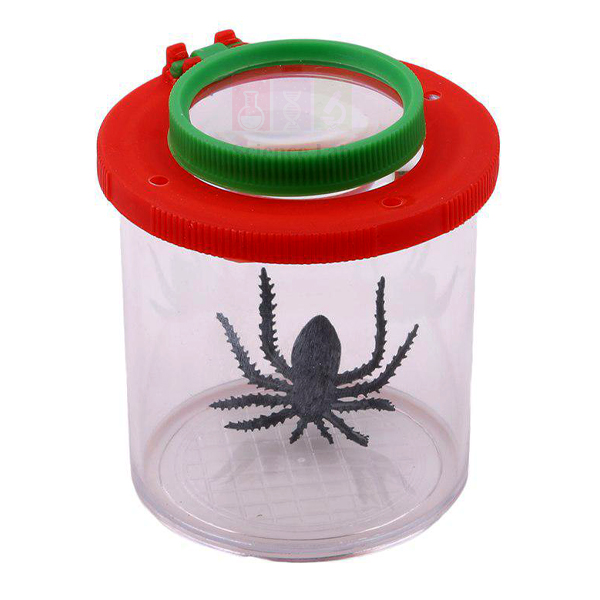
Bug Box (Product Code: SLE/LSM/02) is a small circular viewing pot used to hold insects and other small objects so children can see them magnified during nature study in primary classrooms and outdoor lessons. The pot is 50 mm in diameter and gives 4X magnification, making it a simple addition to an insect collection kit for school field trips. It is supplied by Jain Scientific Equipments Pvt Ltd (ScienceLab), Ambala, India.
Specifications
| Parameter | Detail |
|---|---|
| Shape | Circular pot |
| Diameter | 50 mm |
| Magnification | 4X |
| Use | Holding bugs and small objects for magnified viewing |
| Product code | SLE/LSM/02 |
| Supplied by | Jain Scientific Equipments Pvt Ltd (ScienceLab), Ambala, India |
What Is the Bug Box Used For?
Children gently place an ant, beetle, woodlouse, seed or petal in the pot, close it and look in to count legs, spot antennae or follow the veins on a leaf. Because the creature is held inside the pot, pupils can watch it move without handling it, and several children can take turns looking at the same find.
For school groups it works as a hands-free alternative to a hand lens magnifier, since nobody has to hold the subject and the lens at the same time. Keep observation times short, keep the pot out of direct sun, and release living creatures where they were found before cleaning the pot for the next lesson.
Supplier
ScienceLab is the name under which Jain Scientific Equipments Private Limited, Ambala, Haryana, supplies the Bug Box to primary schools, nature clubs, activity centres and dealers in India and international markets. It is a sourced item within our Science Material range. Institutions that need vendor registration details can note the supplying company’s GSTIN, 06AAECJ8618A1ZT, and its Legal Entity Identifier, 3358004HRD1JIVXKYX49. More is on the ScienceLab profile page.
Related Science Material
Pair the Bug Box with these items for a complete minibeast lesson:
- Bug Box, Gridded — gridded viewer for estimating the size of a find
- Insect Net, Economy — for catching insects before viewing them
- Minibeast Magnifier — another way to examine small creatures
- Pocket Magnifier — for looking at bark, leaves and soil on the spot
- Primary Science Deluxe Lab Set — broader early-science kit for indoor follow-up
Find more early-science tools in the Science Material category.
Frequently Asked Questions
What size is the Bug Box?
The Bug Box (SLE/LSM/02) is a circular pot with a diameter of 50 mm. That is large enough for ants, beetles, seeds and small leaves, and small enough for a child to hold in one hand during outdoor lessons.
How much does the Bug Box magnify?
The Bug Box magnifies its contents 4X. At this magnification children can pick out legs, antennae, wing patterns and leaf veins that are hard to see with the naked eye, without needing a microscope.
What can children observe in the Bug Box?
Children can place bugs and other small items, such as seeds, soil crumbs, petals or small stones, in the Bug Box and see them magnified. Living insects should be observed briefly and then released where they were found.
Is the Bug Box suitable for young children?
The Bug Box is designed for simple nature study by children, and our listing does not state an age range. Teachers should supervise the handling of insects and show pupils how to open and close the pot gently.
Who supplies the Bug Box?
The Bug Box is supplied by Jain Scientific Equipments Pvt Ltd (ScienceLab), Ambala, Haryana, India. It is part of the company’s Science Material range and is supplied to schools, nature clubs, activity centres and dealers across India and international markets.
How do I order Bug Boxes for a whole class?
To order Bug Boxes for a whole class, send the number of boxes and your delivery location through the ScienceLab contact page or the enquiry cart. One box per pair of pupils is a practical ratio for outdoor lessons.
Request a Quote
Ask for a Bug Box quotation through the contact page, or add it to the enquiry cart with nets and magnifiers for your nature study kit.
Last updated: 24 September 2026
Kaleidoscope
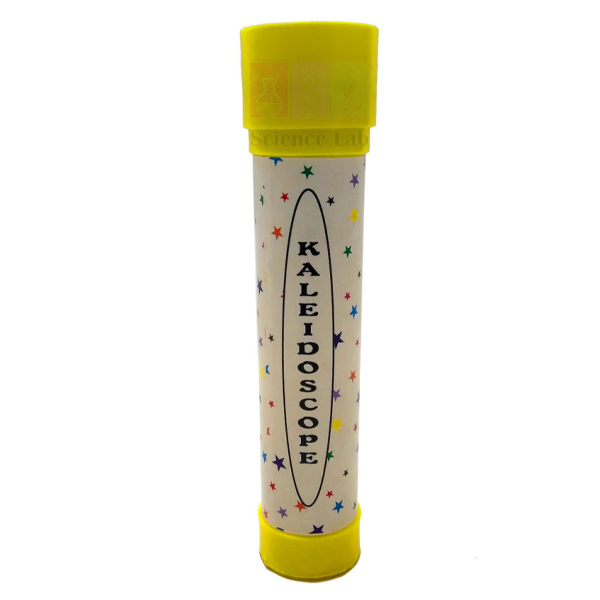
Kaleidoscope (Product Code: SLE/LSM/03) is a hand-held optical toy used to show how reflections repeat into symmetrical, changing patterns in primary science and early-learning classrooms. Teachers of young learners use it for play-based lessons on light and symmetry, and at 0.09 kg it sits easily in small hands. It is supplied by Jain Scientific Equipments Pvt Ltd (ScienceLab), Ambala, India, and fits well into a hands-on science kit for primary school classes.
Specifications
| Parameter | Detail |
|---|---|
| Item | Kaleidoscope (optical pattern viewer) |
| Weight | 0.09 kg |
| Dimensions (as listed) | 21 × 11.5 × 4 cm |
| Product code | SLE/LSM/03 |
| Supplied by | Jain Scientific Equipments Pvt Ltd (ScienceLab), Ambala, India |
What Is the Kaleidoscope Used For?
A kaleidoscope works by bouncing light between mirror surfaces inside a tube, so a small patch of colour is repeated around a centre point. In class it turns an abstract idea — reflection and symmetry — into something a child can see and describe. A simple activity is to let each pupil look, turn the end slowly, and then draw the pattern they saw, counting how many times one shape repeats.
It works well as an opening activity in an optics experiment kit for school, before pupils try a single plane mirror or a periscope. Ask children to aim it at a bright window, a lamp or a coloured picture, never directly at the Sun. Keep it in a box between lessons so the viewing end stays clean and unscratched.
Supplier
Jain Scientific Equipments Private Limited trades as ScienceLab and supplies this Kaleidoscope from Ambala, Haryana, as one of the learning items in its Science Material range for early-years and primary classrooms. Preschools, schools, dealers and importers in India and international markets can order a single piece or enough for a whole class. You can read about the company on the ScienceLab profile page.
Related Science Material
These items build on the same lesson about light, mirrors and seeing:
- Periscope — another mirror-based viewer that shows how light can be turned round a corner.
- Mirror, Plane Glass — lets pupils study a single reflection before the repeated patterns of the kaleidoscope.
- Kaleidoscope seven colours — a demonstration piece for showing the colours of the spectrum to a whole class.
- Lens Big — a large hand lens for the next step in a beginner optics lesson.
See the full Science Material range for more early-learning science items.
Frequently Asked Questions
What is the Kaleidoscope used for in a classroom?
The Kaleidoscope (SLE/LSM/03) is used to introduce reflection and symmetry to young learners. Pupils look through it, turn the end and watch one patch of colour repeat around a centre, then describe or draw the pattern as a simple observation exercise.
What are the size and weight of the Kaleidoscope?
The Kaleidoscope is listed at 21 × 11.5 × 4 cm with a weight of 0.09 kg. The listing does not say whether these figures are for the item alone or as packed, so ask us if you need the exact item size for storage or display.
How should children use the Kaleidoscope safely?
Children should point the Kaleidoscope at a lamp, a bright window or a coloured picture and never directly at the Sun. Handle it gently, avoid dropping it on hard floors, and let a teacher supervise younger groups so the viewing end stays clean and intact.
Who supplies the Kaleidoscope?
The Kaleidoscope is supplied by Jain Scientific Equipments Pvt Ltd, which trades as ScienceLab and is based in Ambala, Haryana, India. The company supplies Science Material items for preschools and primary schools across India and to buyers in international markets.
Can I order the Kaleidoscope in class quantities or for export?
Yes, the Kaleidoscope can be quoted as a single piece or in class and bulk quantities for schools, dealers and importers. Send the quantity and delivery location through the contact page, and ScienceLab will reply with a quotation for India or international delivery.
Request a Quote
To price the Kaleidoscope, send your quantity and delivery location through our contact page, or add it to the enquiry cart together with other Science Material items so one quotation covers the whole order.
Last updated: 24 September 2026
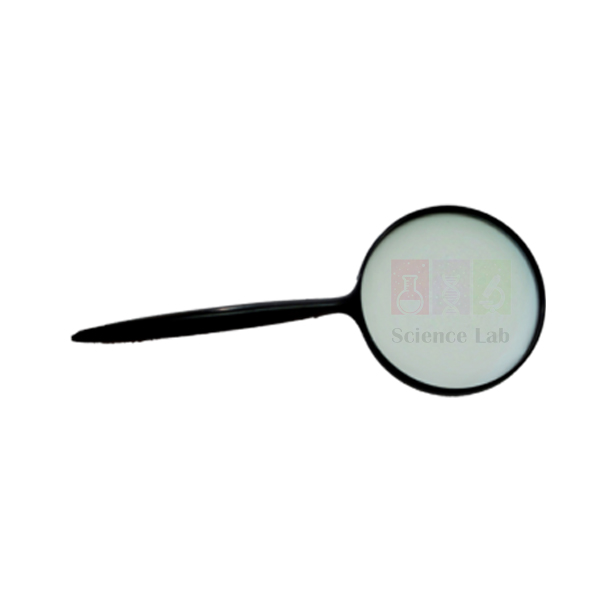
Lens Big
Lens Big (Product Code: SLE/LSM/04) is a large hand lens used to enlarge leaves, seeds, insects, fabric and print during primary science and nature-study lessons. Its 75 mm diameter gives a wide field of view at 2.25X magnification, so two or three children can look through one lens together. It is supplied by Jain Scientific Equipments Pvt Ltd (ScienceLab), Ambala, India, for schools that want a simple hand lens magnifier for school science.
Specifications
| Parameter | Detail |
|---|---|
| Magnification | 2.25X |
| Lens diameter | 75 mm (about 3 inches) |
| Type | Hand-held magnifying lens, large size |
| Product code | SLE/LSM/04 |
| Supplied by | Jain Scientific Equipments Pvt Ltd (ScienceLab), Ambala, India |
What Is the Big Lens Used For?
A big, low-power lens is the easiest magnifier for young learners. At 2.25X the whole object stays in view, so a child can follow an ant across a leaf or compare the veins of two leaves without losing the subject. Typical activities include looking at soil and sand grains, comparing fingerprints, examining flower parts and reading very small print.
Show pupils to hold the lens still and move the object, or keep the object still and move the lens, until the image is sharp. Never look at the Sun through a lens, and do not leave it lying in direct sunlight, because a lens can focus the Sun’s rays and scorch paper or skin. Wipe it with a soft cloth to avoid scratches that blur the view.
Supplier
ScienceLab is the trading name of Jain Scientific Equipments Private Limited in Ambala, Haryana, which supplies the Lens Big as part of its Science Material learning range. Pre-primary and primary schools, activity centres, dealers and importers in India and international markets can request it on its own or with other observation items. Learn more on the company profile.
Related Science Material
Pair the Lens Big with these items for observation and nature-study lessons:
- Bug Box — holds a small insect still so children can study it under the lens.
- Linen Tester — a 10x fold-up magnifier for finer detail once pupils are confident with a hand lens.
- Minibeast Magnifier — another option for looking closely at small creatures found outdoors.
- Microfiber Lens Cloth — for wiping the lens clean without scratching it.
More early-learning items are listed on the Science Material page.
Frequently Asked Questions
What magnification and size is the Lens Big?
The Lens Big (SLE/LSM/04) magnifies 2.25X and has a lens diameter of 75 mm. The low power keeps the whole object in view, and the large lens lets young children find the subject quickly, which suits early-years and primary observation work.
How is the Lens Big different from the Linen Tester?
The Lens Big gives a wide 75 mm view at 2.25X for whole leaves, insects and objects, while the Linen Tester is a fold-up magnifier at 10x for close texture such as cloth fibres or paper. Many schools use the Lens Big first and the Linen Tester later.
What is the Lens Big made of?
The Lens Big listing states its 2.25X magnification and 75 mm diameter but not the lens or handle material. If material matters for your age group or tender, ask us through the contact page and we will confirm it before you order.
How should the Lens Big be cleaned and stored?
Clean the Lens Big with a soft, dry lens cloth and store it in a box or drawer out of direct sunlight. Sunlight passing through any lens can be focused into a hot spot, and a scratched surface makes the magnified image less clear.
Who supplies the Lens Big?
The Lens Big is supplied by Jain Scientific Equipments Pvt Ltd, trading as ScienceLab, from Ambala in Haryana, India. The company supplies Science Material items to schools, dealers and importers in India and international markets.
Can schools buy the Lens Big for a whole class?
Yes, the Lens Big can be quoted in class and bulk quantities as well as single pieces. State how many lenses you need and your delivery location when you enquire, and ScienceLab will send a quotation for delivery within India or abroad.
Request a Quote
Send the quantity of Lens Big you need through the contact page, or place it in the enquiry cart with other observation items and submit one request for a combined quotation.
Last updated: 24 September 2026
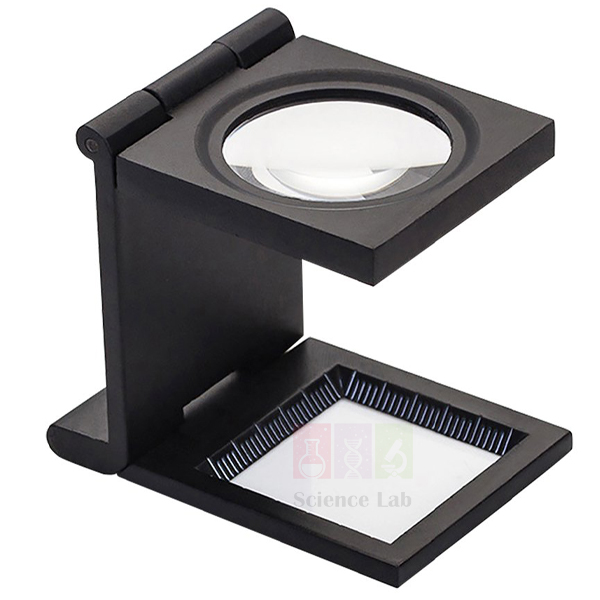
Linen Tester
Linen Tester (Product Code: SLE/LSM/05) is a fold-up 10x magnifier used to examine the fine texture of cloth, paper, skin and other surfaces in school science and textile lessons. Students and teachers use it when a simple hand lens is not strong enough, and its high-clarity lens folds flat for carrying and storage. It is supplied by Jain Scientific Equipments Pvt Ltd (ScienceLab), Ambala, India, as a compact magnifier loupe for lab and classroom work.
Specifications
| Parameter | Detail |
|---|---|
| Magnification | 10x |
| Design | Fold-up magnifier with high-clarity lens |
| Typical subjects | Texture of cloth, paper and skin, among other things |
| Product code | SLE/LSM/05 |
| Supplied by | Jain Scientific Equipments Pvt Ltd (ScienceLab), Ambala, India |
What Is a Linen Tester Used For?
The name comes from the textile trade, where a folding magnifier is laid on fabric to inspect the weave. In a school lab the Linen Tester does the same job for any flat sample: students can see how threads cross in cotton and synthetic cloth, how fibres mat together in paper, and the fine lines and pores on the back of the hand. It also shows printed colour dots, leaf surfaces and grains of salt or sugar in clear detail.
To use it, open the magnifier and rest it over the sample, then bring your eye close to the lens and adjust until the surface is sharp. Good light from a window or desk lamp makes a big difference at 10x. Fold it closed after use to protect the lens, and never leave it in direct sunlight, where any lens can concentrate the Sun’s heat.
Supplier
The Linen Tester is supplied by Jain Scientific Equipments Private Limited, the Ambala company behind the ScienceLab name, within its Science Material range. It is offered to schools, colleges, textile and craft teaching units, dealers and importers across India and international markets. Company background is on the ScienceLab profile.
Related Science Material
These magnifiers and lens-care items suit the same close-observation work:
- Lens Big — a large, low-power hand lens for a wider view of whole objects.
- Magnifier, Foldable — an alternative folding magnifier for student sets.
- Folding Magnifier, Single — another pocket-size option for field and bench work.
- Lens Tissue — for cleaning the lens without leaving lint or scratches.
Browse the Science Material category for more hands-on learning items.
Frequently Asked Questions
What magnification does the Linen Tester give?
The Linen Tester (SLE/LSM/05) magnifies 10x through a high-clarity lens in a fold-up frame. That is strong enough to see individual threads in cloth and fibres in paper, while still being easy for students to hold and focus without a microscope.
What can students examine with the Linen Tester?
The Linen Tester is listed for looking at the texture of cloth, paper and skin, among other things. In practice it also works well on leaf surfaces, printed colour dots, coins, stamps and small crystals, so it fits biology, chemistry and textile activities.
Should I choose the Linen Tester or the Lens Big?
Choose the Linen Tester when students need 10x detail on a small flat area such as a fabric weave. Choose the Lens Big when young children need a wide, low-power view of a whole leaf or insect. Many schools stock both for different age groups.
Does the Linen Tester have a measuring scale or built-in light?
The Linen Tester listing does not mention a measuring scale, reticle or light, so do not assume one is fitted. If you need thread counting marks or illumination, ask us through the contact page before ordering and we will confirm what is available.
Who supplies the Linen Tester?
The Linen Tester is supplied by Jain Scientific Equipments Pvt Ltd, which trades as ScienceLab from Ambala, Haryana, India. The company supplies magnifiers and other Science Material items to schools, dealers and importers in India and international markets.
Request a Quote
For a price on the Linen Tester, tell us the quantity and delivery location through the contact page, or add it to the enquiry cart alongside the other magnifiers you need.
Last updated: 24 September 2026
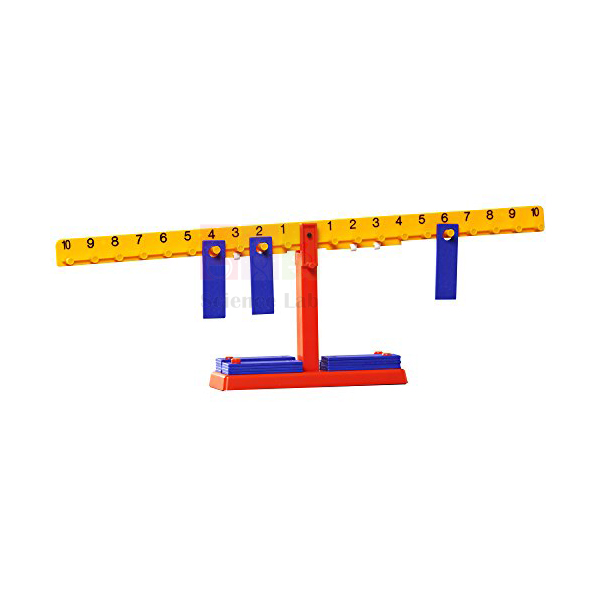
Number Balance
Number Balance (Product Code: SLE/LSM/06) is a beam-type maths balance used to show equality, addition and number bonds in pre-primary and primary classrooms. Teachers use it so children can see a sum “balance” before they write it, and at a listed 0.27 kg and 36 × 13 × 3.5 cm it fits on a group table. It is supplied by Jain Scientific Equipments Pvt Ltd (ScienceLab), Ambala, India, and suits a KG science activity kit in India.
Specifications
| Parameter | Detail |
|---|---|
| Weight | 0.27 kg |
| Dimensions (as listed) | 36 × 13 × 3.5 cm |
| Type | Number (maths) balance for early learning |
| Product code | SLE/LSM/06 |
| Supplied by | Jain Scientific Equipments Pvt Ltd (ScienceLab), Ambala, India |
What Is a Number Balance Used For?
A number balance turns the equals sign into something children can watch. Weights are placed at numbered positions on the two arms of a beam, and the beam settles level only when both sides add up to the same total. A child who hangs weights at 3 and 5 on one side and finds the matching position on the other has discovered that 3 + 5 = 8 without being told.
The same idea supports number bonds, missing-number problems, doubling and early multiplication as repeated addition. Set the balance on a flat, steady table and check that the empty beam sits level before the lesson starts. Let children place weights gently, one at a time, and ask them to predict the result before they let go.
Supplier
Jain Scientific Equipments Private Limited, which trades as ScienceLab from Ambala, Haryana, supplies the Number Balance as part of its Science Material range for early learning. For school vendor registration, the supplying company’s details are CIN U29309HR2020PTC087597 and GSTIN 06AAECJ8618A1ZT. Schools, preschools, dealers and importers in India and international markets can read more on the company profile.
Related Science Material
These maths and balance items extend the same early-number lessons:
- Balance Mathematical — another balance for comparing quantities in the maths corner.
- Dish Balance with Weight Number — uses pans and numbered weights to compare mass and number.
- Number Mat — floor-based counting practice before children move to the balance.
- Number Sticks — hands-on number bonds that can be checked on the balance.
Find more early-years items on the Science Material category page.
Frequently Asked Questions
What does the Number Balance teach?
The Number Balance (SLE/LSM/06) teaches equality, addition, number bonds and missing-number problems. Children place weights on both arms and see the beam level only when the two sides are equal, which gives them a physical meaning for the equals sign.
What are the size and weight of the Number Balance?
The Number Balance is listed at 36 × 13 × 3.5 cm and 0.27 kg. The listing does not say whether these are item or packed figures, so ask us if you need exact measurements for shelving, kit boxes or a tender schedule.
How many weights come with the Number Balance?
The Number Balance listing gives its size and weight but not the number of weights or the numbering range on the beam. Please ask us through the contact page, and we will confirm the contents before you place an order.
How should the Number Balance be set up in class?
Place the Number Balance on a flat, stable table and check that the empty beam rests level. Add weights gently one at a time, and keep spare weights in a small tray or box so none are lost between lessons.
Who supplies the Number Balance?
The Number Balance is supplied by Jain Scientific Equipments Pvt Ltd, trading as ScienceLab, from Ambala, Haryana, India. The company supplies Science Material and maths learning items to schools, preschools, dealers and importers in India and international markets.
Can the Number Balance be ordered for several classrooms?
Yes, the Number Balance can be quoted singly or in class and bulk quantities for schools, preschool chains, dealers and importers. Send the number of units and the delivery location, and ScienceLab will reply with a quotation for India or international delivery.
Request a Quote
Ask for a Number Balance quotation through the contact page, or add it to the enquiry cart with your other maths and early-learning items so they can be priced together.
Last updated: 24 September 2026
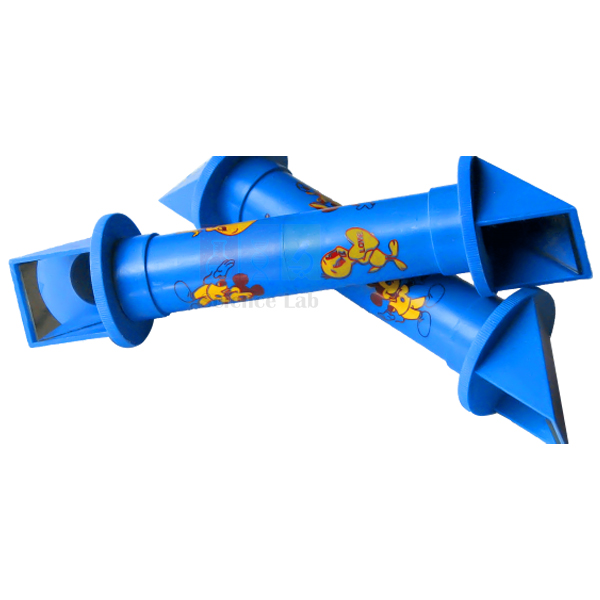
Periscope
Periscope (Product Code: SLE/LSM/07) is a simple optical instrument used to observe from a concealed position, and to teach the reflection of light in primary and middle-school science. It is a tube with a mirror at each end, the two mirrors set parallel to each other and at 45° to the line between them, so students can see over a wall or round a corner. It is supplied by Jain Scientific Equipments Pvt Ltd (ScienceLab), Ambala, India, for any junior lab kit for primary school.
Specifications
| Parameter | Detail |
|---|---|
| Construction | Tube with a mirror at each end |
| Mirror arrangement | Mirrors parallel to each other, each at 45° to the line between them |
| Purpose | Observation from a concealed position; teaching reflection of light |
| Product code | SLE/LSM/07 |
| Supplied by | Jain Scientific Equipments Pvt Ltd (ScienceLab), Ambala, India |
What Is a Periscope Used For?
In the classroom the Periscope is the clearest everyday proof that light travels in straight lines and changes direction only when it is reflected. Light entering the top opening meets the first mirror at 45°, turns through a right angle down the tube, and is turned again by the second mirror into the viewer’s eye. Because the mirrors are parallel, the scene appears the right way up.
A good lesson has pupils crouch behind a bench and read a chart held above it, then draw the ray diagram showing the two reflections. Older students can link the design to submarines and to watching over crowds. Keep fingers off the mirror surfaces, wipe them only with a soft cloth, and never point the Periscope at the Sun.
Supplier
This Periscope comes from the Science Material range supplied by Jain Scientific Equipments Private Limited, the company that trades as ScienceLab in Ambala, Haryana. Schools, tuition and activity centres, dealers and importers across India and international markets can order it on its own or with other light and optics items. More about the company is on our profile page.
Related Science Material
Use these items alongside the Periscope in lessons on reflection:
- Plane Mirror — lets students measure the angles of a single reflection before explaining the Periscope.
- Kaleidoscope — shows what happens when light reflects many times between mirrors.
- Prism – Acrylic, Set of 7 — for comparing reflection by mirrors with the bending of light by prisms.
The Science Material page lists the rest of this early-science range.
Frequently Asked Questions
How does the Periscope work?
The Periscope (SLE/LSM/07) uses two parallel mirrors, one at each end of a tube, each set at 45°. Light from the object is turned through a right angle by the top mirror and again by the bottom mirror, so the viewer sees the scene from a hidden position.
Which science topics does the Periscope support?
The Periscope supports lessons on how light travels in straight lines, the law of reflection and drawing ray diagrams. It also gives a practical link to real uses such as submarines, which helps pupils remember why the mirrors are angled as they are.
What length and material is the Periscope?
The Periscope listing describes its tube and the 45° parallel mirror arrangement but does not state the tube length or the materials used. Please ask us through the contact page if these details are needed for a tender or for younger age groups.
How should the Periscope be looked after?
Store the Periscope in a dry cupboard, keep fingers off the mirror surfaces and clean them gently with a soft, dry cloth. Avoid dropping it, because a knocked mirror can shift from its 45° angle and the view through the tube will no longer line up.
Who supplies the Periscope?
The Periscope is supplied by Jain Scientific Equipments Pvt Ltd, which trades as ScienceLab from Ambala, Haryana, India. The company supplies Science Material items to schools, dealers and importers throughout India and in international markets.
Can the Periscope be ordered as a class set?
Yes, the Periscope can be quoted as single pieces or as class and bulk quantities. Tell us how many you need and where they should be delivered, and ScienceLab will prepare a quotation for delivery in India or to an international address.
Request a Quote
Request a Periscope quotation on the contact page with your quantity and delivery location, or add it to the enquiry cart together with mirrors and other optics items.
Last updated: 24 September 2026
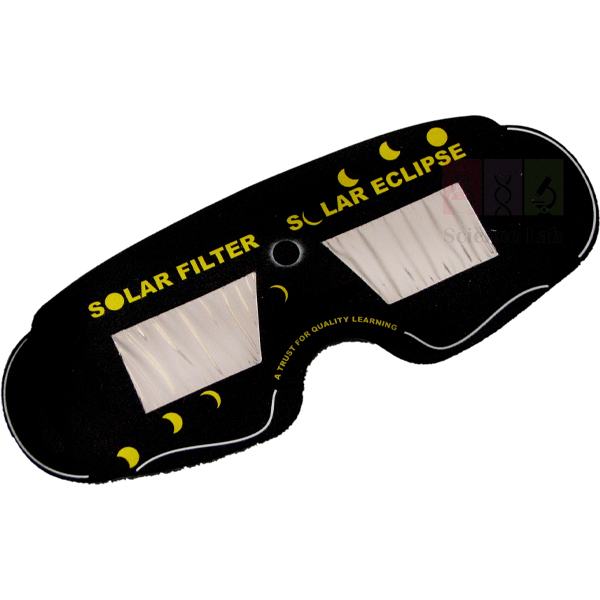
Solar Filter
Solar Filter (Product Code: SLE/LSM/08) is a sun-viewing filter made of double sheets of aluminium polymer film, used to look at the Sun during eclipse and astronomy lessons in schools. Teachers use it so a class can watch the Sun’s disc and a passing eclipse under supervision, instead of looking with bare eyes. It is supplied by Jain Scientific Equipments Pvt Ltd (ScienceLab), Ambala, India, as part of its early-science range and a useful addition to an earth science kit in India.
Key Details
| Parameter | Detail |
|---|---|
| Filter material | Aluminium polymer film |
| Construction | Double sheets of film |
| Purpose | Viewing the Sun |
| Product code | SLE/LSM/08 |
| Supplied by | Jain Scientific Equipments Pvt Ltd (ScienceLab), Ambala, India |
What Is a Solar Filter Used For?
Looking straight at the Sun can damage the eyes within moments, so astronomy lessons need a filter placed between the eye and the Sun. The Solar Filter lets a class follow a partial or annular solar eclipse, see the Sun as a clean disc, and discuss why the Moon’s shadow moves across it. It turns a topic usually taught from diagrams into a shared observation.
Before every use, hold the film up to a lamp and check both sheets for scratches, pinholes, creases or tears; do not use a damaged filter. Cover both eyes with the filter before facing the Sun and look away before lowering it. Never use it together with binoculars, a telescope, a camera or a magnifier, because concentrated sunlight can burn through the film, and always have an adult supervising children.
Supplier
Jain Scientific Equipments Private Limited sources and supplies the Solar Filter under its ScienceLab trading name from Ambala, Haryana, within its Science Material range. Schools, science clubs, planetariums, dealers and importers in India and international markets can order it ahead of eclipse events or for regular astronomy teaching. See the ScienceLab company profile for more about the business.
Related Science Material
These items support the same lessons on the Sun, Earth and Moon:
- Solar System Model — explains the positions of the Sun and planets before pupils observe the real Sun.
- Mini Science Kit – Earth, Sun and Moon — models how the Moon moves between Earth and Sun to cause an eclipse.
- Primary Science Deluxe Lab Set — a wider primary science set from the same Science Material range.
More items are listed on the Science Material category page.
Frequently Asked Questions
What is the Solar Filter made of?
The Solar Filter (SLE/LSM/08) is made of double sheets of aluminium polymer film for viewing the Sun. The listing does not give the frame type or overall size, so ask us through the contact page if you need those details before ordering.
Which safety standard or optical density does the Solar Filter meet?
The Solar Filter listing describes the film but does not state a solar-viewing safety standard or optical density. Ask us for these details before buying for an eclipse event, and follow your local astronomy or health authority’s advice on safe solar viewing.
How do students use the Solar Filter safely?
Students should check the Solar Filter for scratches, pinholes or tears, cover both eyes with it before facing the Sun, and look away before lowering it. It must never be used with binoculars, telescopes, cameras or magnifiers, and children should always be supervised by an adult.
When should the Solar Filter be replaced?
Replace the Solar Filter as soon as the film shows any scratch, pinhole, crease or tear, because damaged film can let unfiltered sunlight reach the eye. Store it flat in an envelope or box, away from sharp objects, so the sheets stay intact between uses.
Who supplies the Solar Filter?
The Solar Filter is supplied by Jain Scientific Equipments Pvt Ltd, which trades as ScienceLab from Ambala, Haryana, India. The company supplies Science Material items to schools, science clubs, dealers and importers in India and in international markets.
Can schools order Solar Filters in bulk before an eclipse?
Yes, the Solar Filter can be quoted in class and bulk quantities for schools, clubs, dealers and importers. Enquire early with the quantity and delivery location so the quotation and dispatch can be planned well before the eclipse date you are preparing for.
Request a Quote
Send the number of Solar Filters you need and your delivery location through the contact page, or add the item to the enquiry cart with other astronomy and Science Material items.
Last updated: 24 September 2026