- Physics Lab Equipment
- Chemistry Lab Equipment
- Biology Lab Equipment
- Anatomical Lab Equipment
- Learning
- Educational Lab Equipment
- Magnets
- Agriculture
- Astronomy
- Earth Science
- Geography Lab Equipment
- Safety Lab Coat
- Laboratory
- Meteorological
- Electricity & Magnetism
- Heat
- School Lab Equipment
- Lab Glassware
- Science Lab Equipment
- Tvet Lab Equipment
- Robotics Kits Supplier and Manufacturer for Schools India
- Math Lab Equipment Manufacturers and Exporters in Ambala
- STEM Kits Manufacturers and Supplier India
- Engineering Lab Equipment
- Hospital Lab Equipment
- Water, Sanitation & Hygiene Supplies
- Cold Chain, Solar & Communication Equipment
- Nutrition
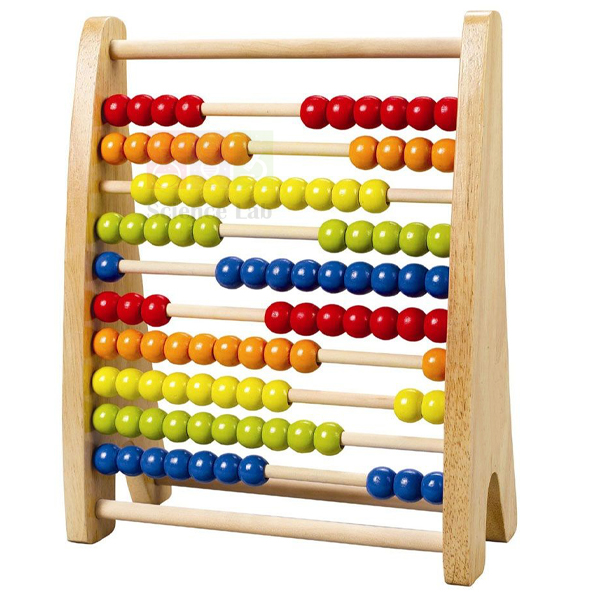
Abacus Upright
Abacus Upright (Product Code: SLE/MAT/02) is an upright bead-frame calculating instrument used for teacher-led demonstrations of place value, counting and regrouping in primary and middle-school maths rooms. Like every abacus, its beads slide along a series of wires or rods set in a frame to represent the decimal places, and the upright format suits showing each step to a group. It is manufactured by Jain Scientific Equipments Pvt Ltd (ScienceLab), an OEM manufacturer, at its own factory in Ambala, India.
Key Details
| Parameter | Detail |
|---|---|
| Type | Calculating instrument with a bead frame |
| Working principle | Beads slide along a series of wires or rods set in a frame |
| Place value | Rods represent the decimal places |
| Format | Upright version, suited to demonstrating to a group |
| Product code | SLE/MAT/02 |
| Manufacturer | Jain Scientific Equipments Pvt Ltd (ScienceLab) — OEM |
| Country of origin | India (made in Ambala, Haryana) |
What Is the Abacus Upright Used For?
With the frame standing at the front of the room, the teacher can build a number while the class counts aloud, then ask pupils what changes when one more bead is moved. Regrouping becomes visible: when a rod is full, the beads are cleared and one bead moves up to the next place. Showing that multiplying by ten simply shifts the bead pattern one rod to the left is a memorable moment for many learners.
Invite pupils to the frame to solve a sum while others check on paper or on their own desk abacus. Face the beads towards the class, use a pointer to show which rod is being changed, and keep the frame at a height the back row can see. It is an easy addition to school lab equipment for a dedicated maths room.
OEM Manufacturer
Jain Scientific Equipments Private Limited produces the Abacus Upright under its ScienceLab trading name as the original equipment manufacturer, working from its own licensed factory in Saha, Ambala, Haryana, India. Because the item is built there and not bought in from another firm, schools, education departments, dealers and importers get their quotation from the maker itself, and any later request for parts or extra frames goes back to the same factory — just ask us. Company background is on the ScienceLab profile page.
Related Maths Lab Equipment
These resources support the same place value lessons at pupils' desks.
- Abacus Desk/Table — the desk version so each pupil can copy the demonstration.
- Decimal Abacus — another abacus option for decimal place value.
- Place Value Board Multiplication — extends place value into multiplication practice.
- Stacking Counters — loose counters for building the same numbers in columns.
- Base Ten Blocks — a solid model of units, tens and hundreds.
Find more teaching aids in the Maths Lab Equipment category.
Frequently Asked Questions
What is the Abacus Upright?
The Abacus Upright is a calculating instrument whose beads slide along a series of wires or rods set in a frame to represent the decimal places. Its upright format makes it a demonstration abacus for teaching a whole group.
Why use an upright abacus instead of desk abacuses?
An upright abacus such as the Abacus Upright lets the teacher model a calculation where every pupil can follow it. Many classrooms use it at the front together with desk abacuses, so pupils repeat each step on their own frames.
How does the Abacus Upright represent place value?
On the Abacus Upright each rod represents one decimal place. Beads on the right-hand rod count units, the next rod counts tens, and so on, so a number is read by counting the beads moved on each rod.
What size is the Abacus Upright and how many beads does it have?
The listing for the Abacus Upright does not give its dimensions, bead count or frame material. Please ask through the contact page and ScienceLab will confirm the details that matter for your classroom.
Who manufactures the Abacus Upright?
The Abacus Upright is manufactured by Jain Scientific Equipments Pvt Ltd (ScienceLab), the OEM, at its own licensed factory in Saha, Ambala, Haryana, India, and is supplied factory-direct to schools, dealers and importers.
What information does a quotation for the Abacus Upright need?
For an Abacus Upright quotation, state the number of frames, any desk abacuses or other maths items to include, and the delivery address in India or abroad. Send it through the contact page for a manufacturer's quote.
Request a Quote
Request pricing for the Abacus Upright through the contact page or add it to the enquiry cart. The quotation is issued directly by ScienceLab as manufacturer.
Last updated: 24 September 2026